Enter product details (such as color, size, materials etc.) and other specific requirements to receive an accurate quote...
Leave A Message
If you are interested in our products and want to know more details, please leave a message here, we will reply you as soon as we can.
submit
Home

News

News

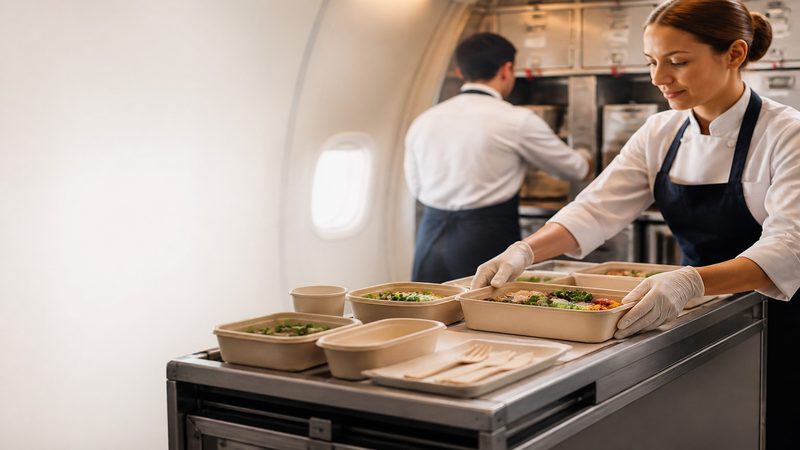
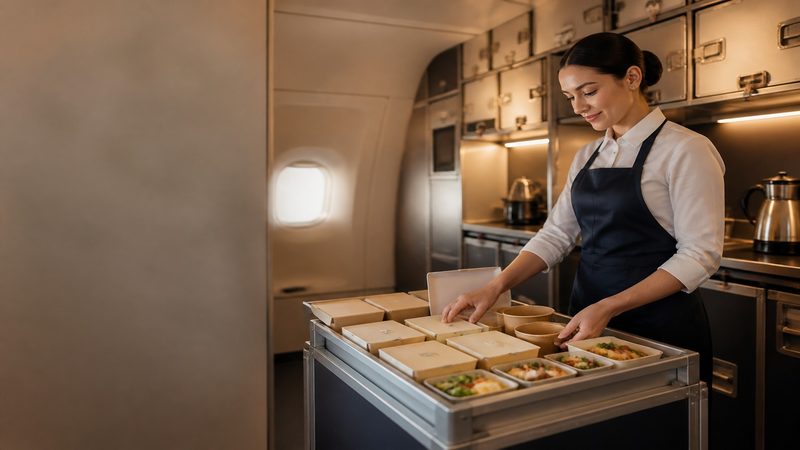
  • Industry research puts the global inflight catering market at roughly USD 29.8 billion in 2026, on a trajectory to exceed USD 50 billion by 2032 with a compound growth rate near 8%. The expansion is driven by fleet growth, premium cabin service competition and the recovery of long-haul travel. Packaging trends shaping the market Biodegradable and recyclable materials: airlines are adopting compostable tableware and recyclable meal boxes as standard in new catering tenders Branded presentation: custom-printed meal boxes and cups are used to differentiate premium service and carry airline identity Portion-ready formats: compartment trays and individually wrapped cutlery reduce assembly labour and improve hygiene Regional sourcing: airlines increasingly require suppliers with local production capacity and short lead times Positioning for suppliers The market's growth rewards manufacturers offering the full service chain: custom printing, food-contact certification, flexible MOQ and reliable delivery. Airlines consolidating suppliers favour factories that can deliver printed meal boxes, cutlery kits, cups and wet wipes under one quality system - exactly the structure of a vertically integrated packaging manufacturer. Source: Coherent Market Insights - Inflight catering market; Market Research Future - Airline food packaging market

    Read More

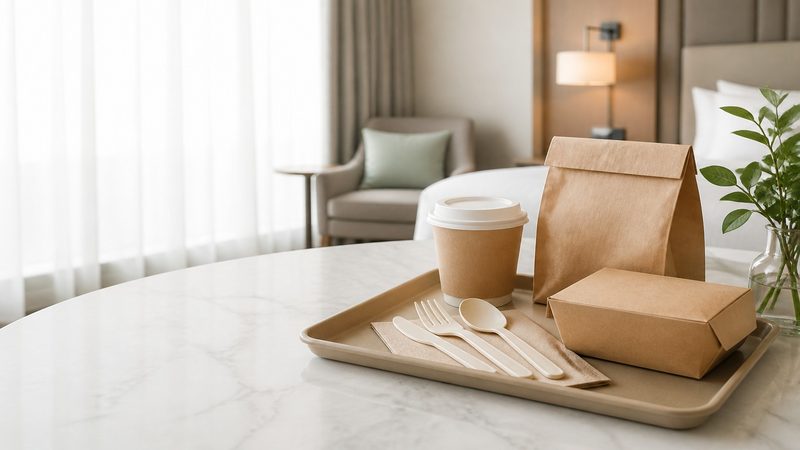
  • In January 2026, the Ministry of Commerce and eight other departments issued the Notice on Implementing the Green Consumption Promotion Action. The policy pushes hotels, catering and retail toward degradable cleaning products, reusable or refillable amenities and reduced single-use plastic supply. Policy highlights for the hospitality sector Green hotels encouraged to use degradable guest-room consumables and to stop proactively providing single-use plastic items Foodservice operators guided toward certified degradable tableware and packaging Retail and express sectors continue the national plastic-reduction trajectory set since 2020 The notice reinforces a decade-long policy direction: degradable alternatives are no longer optional for institutions serving consumers who expect sustainability. Product implication Hotel groups, catering companies and retailers in China are consolidating procurement of PLA cutlery, biodegradable carrier bags, paper cups and self-adhesive degradable bags to meet the policy. Manufacturers with documented certifications and stable capacity - like Guangdong Xinghan Industrial - are positioned to serve this institutional demand. Source: MOFCOM - Green Consumption Promotion Action notice

    Read More
  • The International Civil Aviation Organization's Strategic Plan 2026-2050 projects global air passenger traffic reaching 12.4 billion by 2050. For the cabin supply and inflight catering industry, this trajectory - combined with sustainability mandates - defines the demand outlook for the next two decades. What the numbers mean Volume growth: more flights and passengers translate directly into higher consumption of cabin consumables - wet wipes, towels, cutlery, meal packaging, waste bags and security seals Sustainability pressure: the same plan embeds environmental goals that push airlines toward certified biodegradable and recyclable products Supply-chain reliability: airlines serving growing fleets need manufacturers with scalable capacity and documented quality systems Why it matters now Procurement decisions made in 2026 shape multi-year framework agreements. Airlines and their catering partners are consolidating suppliers that can deliver both volume growth capacity and compliance documentation. Manufacturers with ISO-certified systems and a full range of cabin consumables - from wet wipes to boarding passes - are best positioned for these framework programs. Source: ICAO Strategic Plan 2026-2050

    Read More
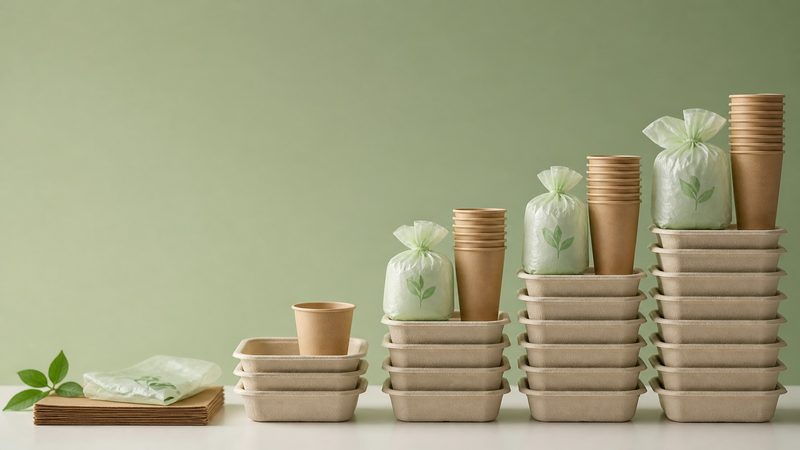
  • The global biodegradable plastic packaging market is estimated at USD 19.32 billion in 2026, growing at a 21.57% compound annual rate to reach USD 92.15 billion by 2034, according to Fortune Business Insights. For procurement teams, the rapid growth signals both rising material availability and tightening competition for certified capacity. Market drivers in 2026 EU PPWR and anti-greenwashing rules reshaping packaging specifications China's national plastic-reduction programme driving domestic demand for PLA/PBAT products Aviation and foodservice sectors adopting certified biodegradable tableware as a standard Industry data shows global biodegradable plastics capacity at roughly 2.85 million tonnes with utilisation around 74% - PLA and PBAT accounting for the majority of output. Prices for PLA have stabilised in the range of RMB 23-27/kg in recent months, reflecting a maturing supply chain. Buyer implication With capacity utilisation high and policy-driven demand rising, buyers should lock in qualified suppliers early. Verify that a manufacturer's PLA/PBAT products carry the degradability certifications required by your destination market, and confirm MOQ and lead-time stability before committing. Source: Fortune Business Insights - Biodegradable plastic packaging market; GEP Research - Global biodegradable plastics report 2026

    Read More
  • China's food-contact material standard system continues to evolve in 2026. National standards bodies are revising definitions for food-contact materials and effective barrier layers, and adding safety assessment requirements for non-intentionally added substances (NIAS) - changes that affect paper tableware, plastic tableware and food packaging producers. Key 2026 developments Revision of terminology for food-contact materials and finished products New requirements for assessing non-intentionally added substances in materials Continued implementation of the 2025-published national standards taking effect in 2026, including updated migration-test requirements Ongoing national standards work on plastic single-use tableware general technical requirements (TC397) For manufacturers, the direction is clear: food-contact products need more rigorous migration testing, material declarations and traceability documentation than ever before. What buyers should ask suppliers When sourcing paper cups, PLA-coated tableware or food packaging, request up-to-date food-contact test reports aligned with the current national standard system. Verify that the supplier monitors standard revisions - documentation based on outdated standards may not satisfy 2026 tender requirements. Source: Food Contact Science - June 2026 standard revision progress; CIRS - Four food-contact standards effective 2026

    Read More
  • From 27 September 2026, the EU's anti-greenwashing rules introduced by Directive (EU) 2024/825 apply. The directive restricts unsubstantiated environmental claims on packaging and marketing - a change that directly affects how suppliers describe biodegradable, compostable and recyclable products. What changes Generic claims limited: vague terms like "eco-friendly" or "biodegradable" without certification evidence will be treated as misleading Certification required: claims must be backed by recognised standards or third-party verification Whole-supply-chain exposure: brands and their packaging suppliers both carry risk if claims are not substantiated Suppliers selling into the EU should ensure every environmental claim on packaging - printed or online - maps to a verifiable certification such as EN 13432 for compostability or documented test reports. Practical guidance for buyers When sourcing biodegradable tableware or bags for EU markets, request the specific standard and test report behind each claim. A supplier who can show GB/T 38082, EN 13432 or equivalent documentation - and prints only what is certified - protects your brand from greenwashing risk. Source: EU greenwashing rules for food packaging

    Read More
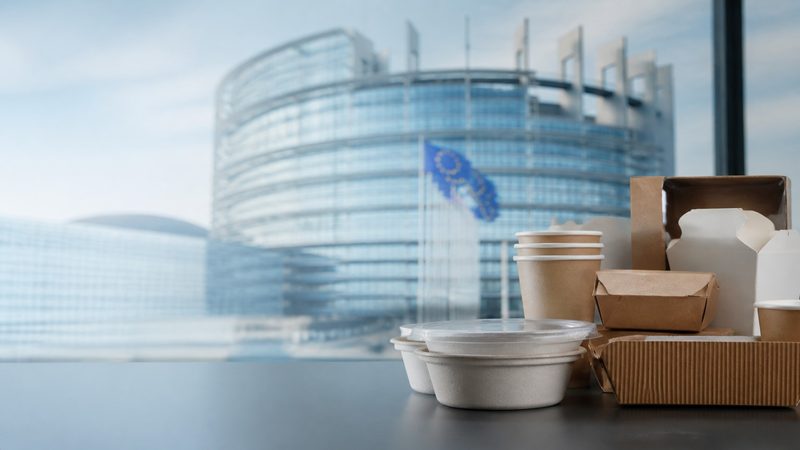
  • On 12 August 2026, the EU's Packaging and Packaging Waste Regulation (PPWR) began applying uniformly across all EU member states, replacing the previous Packaging and Packaging Waste Directive. For Chinese exporters of food and foodservice packaging, this is the single most important regulatory change of the year. Key requirements entering force PFAS restriction: food packaging containing per- and polyfluorinated alkyl substances (PFAS) is prohibited from being placed on the EU market Recyclability design: packaging must be designed for recyclability, with harmonised EU-wide rules Phased single-use prohibitions: additional single-use plastic packaging formats are scheduled for prohibition from 2030, including single-portion sachets and containers Exporters should verify that food-contact materials, inks and coatings in their packaging do not contain restricted PFAS substances, and should prepare recyclability documentation for EU customs and market surveillance. What this means for foodservice packaging buyers For airlines, caterers and food brands selling into the EU, paper-based, PLA-coated and moulded-fibre products are increasingly the safe choice - they avoid the PFAS issue inherent in some grease-resistant coated papers and align with the regulation's recyclability direction. Xinghan's paper cups, bagasse trays and kraft packaging are produced with food-contact-safe materials and documentation. Source: European Commission - Packaging waste; Packaging Law - PPWR analysis; Cartonpack - PPWR 2026 guide

    Read More
  • In August 2026, Air China issued a joint procurement notice for general single-use tableware covering three bid packages: biodegradable cutlery kits, wet wipes and paper meal boxes. The tender - open to all qualified suppliers - is a clear signal of how Chinese carriers are structuring cabin consumables purchasing in 2026. Three packages, three product families The bid list maps almost one-to-one onto the product lines of specialised aviation suppliers: Biodegradable cutlery kits - PLA and wood-based fork/spoon sets, individually wrapped for cabin distribution Wet wipes - individually wrapped hygiene wipes for passenger service Paper meal boxes - printed meal containers for inflight catering Each package can be bid separately, reflecting how airlines segment procurement to invite specialised manufacturers rather than only full-range suppliers. How suppliers should prepare For manufacturers, the tender signals that degradability certification, hygiene licensing and consistent batch quality are now baseline requirements for airline tenders. Suppliers able to document GB/T 38082 or equivalent biodegradability standards, food-contact safety and stable MOQ fulfilment have a competitive edge. Guangdong Xinghan Industrial produces all three product families and has supplied airline catering companies across China since 2018. Source: Air China procurement announcement

    Read More
  • On 21 May 2026, the Civil Aviation Green Tableware Industry Chain Innovation Forum opened in Haikou, held during the Fourth Civil Aviation Green Development Conference. The forum brought together airlines, catering companies, tableware manufacturers and recycling operators to discuss a full-chain model for green inflight tableware - from classified disposal and centralised collection to sorting, recycling and reuse. What the forum means for cabin suppliers China's aviation industry has been phasing out non-degradable single-use plastics since 2021 under the CAAC Plastics Pollution Control Work Plan (2021-2025). The 2026 forum signals the next phase: moving beyond simple material substitution toward a complete collection and recycling system for green tableware. For B2B buyers, the practical consequence is rising demand for certified biodegradable meal boxes, cutlery kits and foodservice disposables that can be integrated into an airline's waste-management workflow - not just compliant in material, but compatible with sorting and recycling operations. Relevance to our product range Guangdong Xinghan Industrial supplies PLA cutlery kits, bagasse meal trays, PLA-coated cups and biodegradable packaging bags that meet the material requirements of China's green aviation programme. Buyers planning 2026 cabin and catering tenders should confirm degradability certification and supply-chain traceability early in the procurement cycle. Source: China Daily - Forum announcement; Science and Technology Daily - Industry response to international environmental evidence-chain competition

    Read More
1 2

Leave A Message

Leave A Message
If you are interested in our products and want to know more details, please leave a message here, we will reply you as soon as we can.
submit
Contact us:sales@xhanco.com

Home

Products

WhatsApp

contact